
IEL-RS: Navigation and UX Restructuring
2025 · Case Study · 6 min read
My Role and Scope
I was responsible for the entire UX and navigation restructuring process, from initial diagnosis to final design and development delivery. I conducted information architecture, flows, prototyping, and testing, in partnership with a copywriter (content) and the development team (implementation).
Impact and Potential
The new architecture eliminated navigation barriers, facilitated quick access to information, and was planned to grow in an organized way, allowing new products to be included like items on a market shelf: each in the right place, clear and accessible.
The Challenge Presented
In 2025, there was a need to completely remodel the IEL-RS website, whose structure had remained unchanged since 2018. Over this period, the set of solutions and services offered by the company grew and became more diverse, making the existing information organization insufficient to handle the volume and diversity of current content.
The complexity of the challenge increased because IEL-RS does not operate independently. It is part of the FIERGS System, a solid and unified organization, formed by FIERGS, CIERGS, SESI-RS, SENAI-RS, and IEL-RS. This meant that the IEL-RS website renovation needed to be in harmony with a "Major Portal" and, mainly, follow a "Macro Design System" used by all units of the System. My mission was to rethink the entire organization from scratch, maintaining the Drupal platform already in use and ensuring visual and functional unity with the rest of FIERGS' digital environment.
How I Approached the Problem
To ensure that the new structure met both business needs and user expectations, and fit perfectly into the FIERGS ecosystem, I followed a consistent, data-driven method:
1. Immersion and Business Understanding
I started with a deep dive into the IEL-RS universe and the FIERGS System context. I held several meetings with stakeholders to understand IEL's new portfolio, strategic objectives, and which services and products should be highlighted on the website. I understood IEL-RS's mission to "Transform industry through innovation and development of people, careers, and companies" and its focus on Innovation Management, Executive Education, and Talent Integration.
2. Market and Competition Analysis
I conducted detailed benchmarking with websites of other IELs in Brazil and companies offering similar services and products. This allowed me to identify best practices, navigation trends, and differentiation opportunities, always seeking synergy with the FIERGS System.
3. Study and Application of the Macro Design System
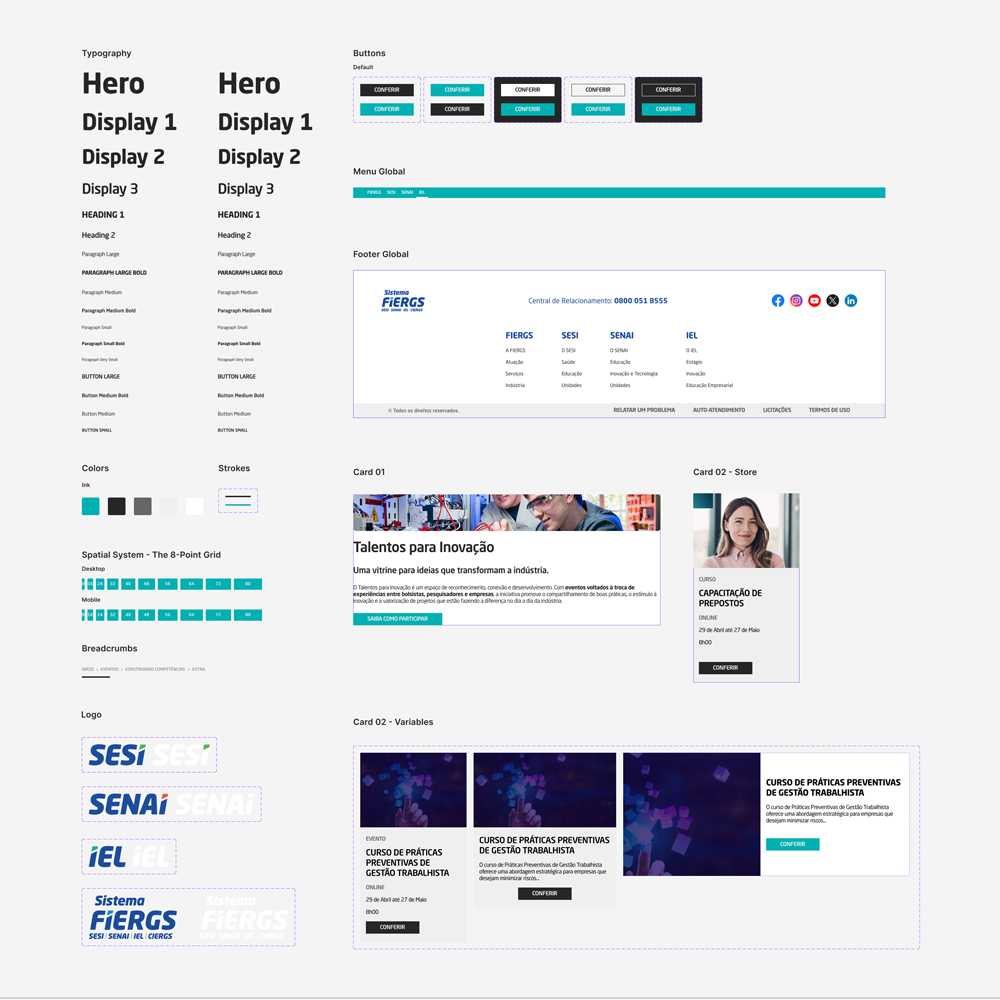
A crucial aspect was the thorough study of the FIERGS System's Macro Design System. Understanding the brand guidelines, UI components, and interaction patterns was fundamental to ensuring that the new IEL-RS website was a coherent extension of the "major portal." In Figma, I created and used components from this Design System, ensuring that the IEL-RS prototype was fully aligned with the unified visual identity of the FIERGS System.
4. Content Analysis with AI
To make sense of the large volume of portfolio data, I used NotebookLM. This tool was essential for analyzing and creating a first version of the taxonomy, which I displayed and organized in FigJam to facilitate teamwork.
Click here to see the complete navigation and journeys mapping in FigJam.
5. Taxonomy and Information Architecture Validation
With this foundation, I moved on to validate the structure with users:
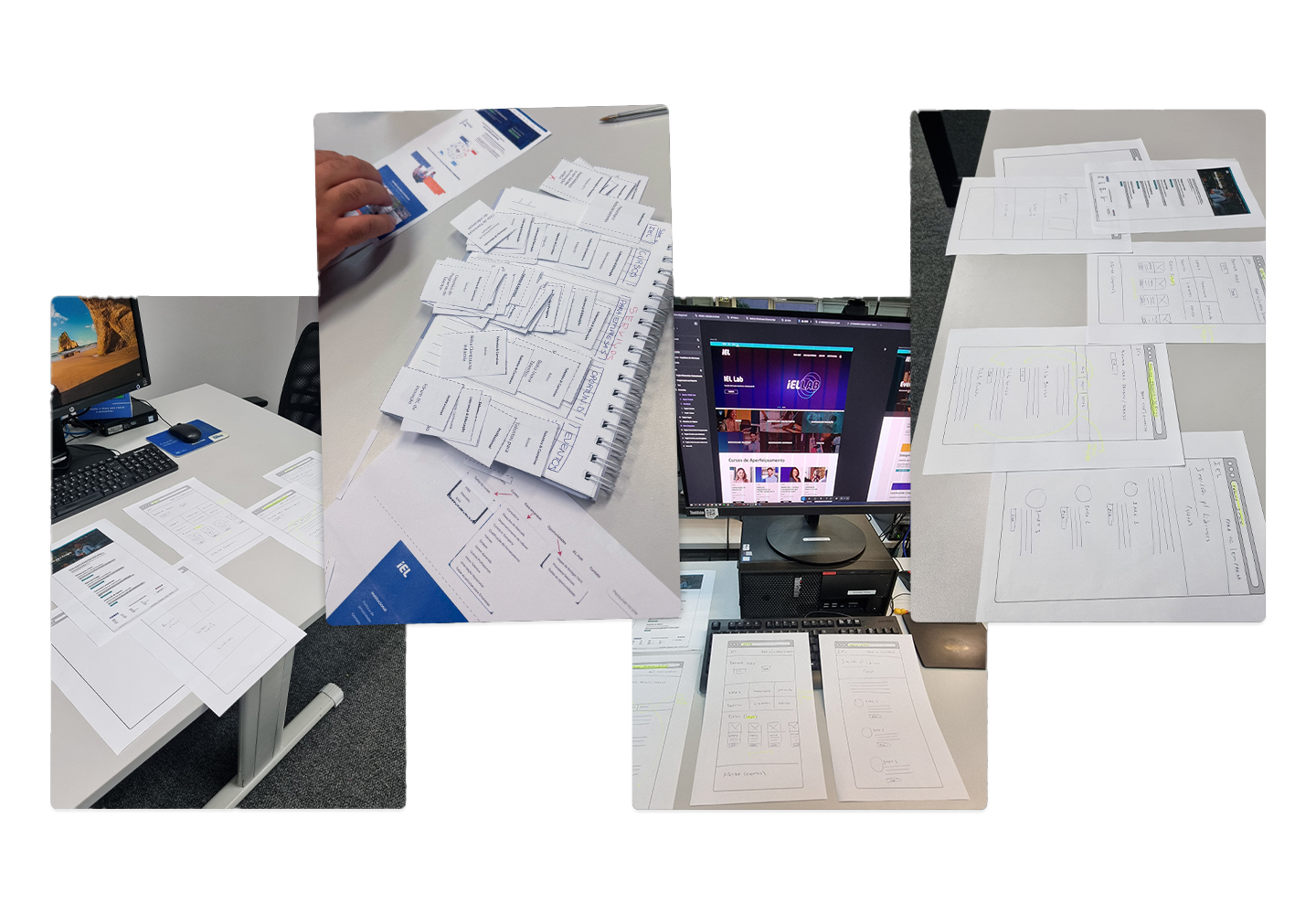
Card Sorting: We conducted group Card Sorting dynamics with colleagues, which greatly helped understand how users think about categories and improve names.
Tree Testing: I used tree tests to verify if the hierarchy and navigation levels made sense, ensuring users could find what they were looking for without difficulty.
6. Core Structure and Hierarchy Definition
With the collected insights, we decided that the easiest and fastest way for users to find what they need was to divide the site into two main areas: "For Your Company" (Legal Entity) and "For You" (Individual). This division considers IEL-RS's different audiences (Interns, HR, and Entrepreneurs), simplifying navigation and showing how the FIERGS System works together to offer complete solutions for industries.
Consolidated navigation structure by user profile
Based on the learnings from previous phases, we defined a new central navigation strategy, organized by target audience: “For You” (Individual), and “For Your Company” (Corporate). This division makes access to content more strategic and clearly highlights the different solutions that IEL-RS offers to diverse audiences, from interns and managers to HR leaders and business executives. The image alongside represents the complete and validated site structure, consolidating the services portfolio into clear navigation paths. This architecture was designed to support the main menu, content distribution on the homepage, and the definition of conversion journeys. This structure was shared with the content and technology teams, serving as the primary guide for the ongoing development and maintenance of the website.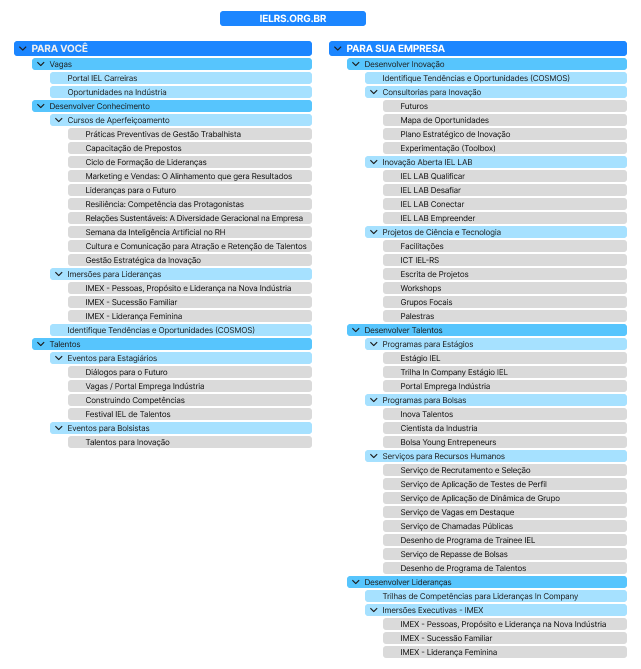
7. Prototyping and Template Creation
In Figma, and using the Macro Design System, I created a complete prototype for the "For You" area. This prototype served as a model and set of templates, ensuring that design and experience were consistent when creating the "For Your Company" section, following the visual and interactive guidelines of the system.
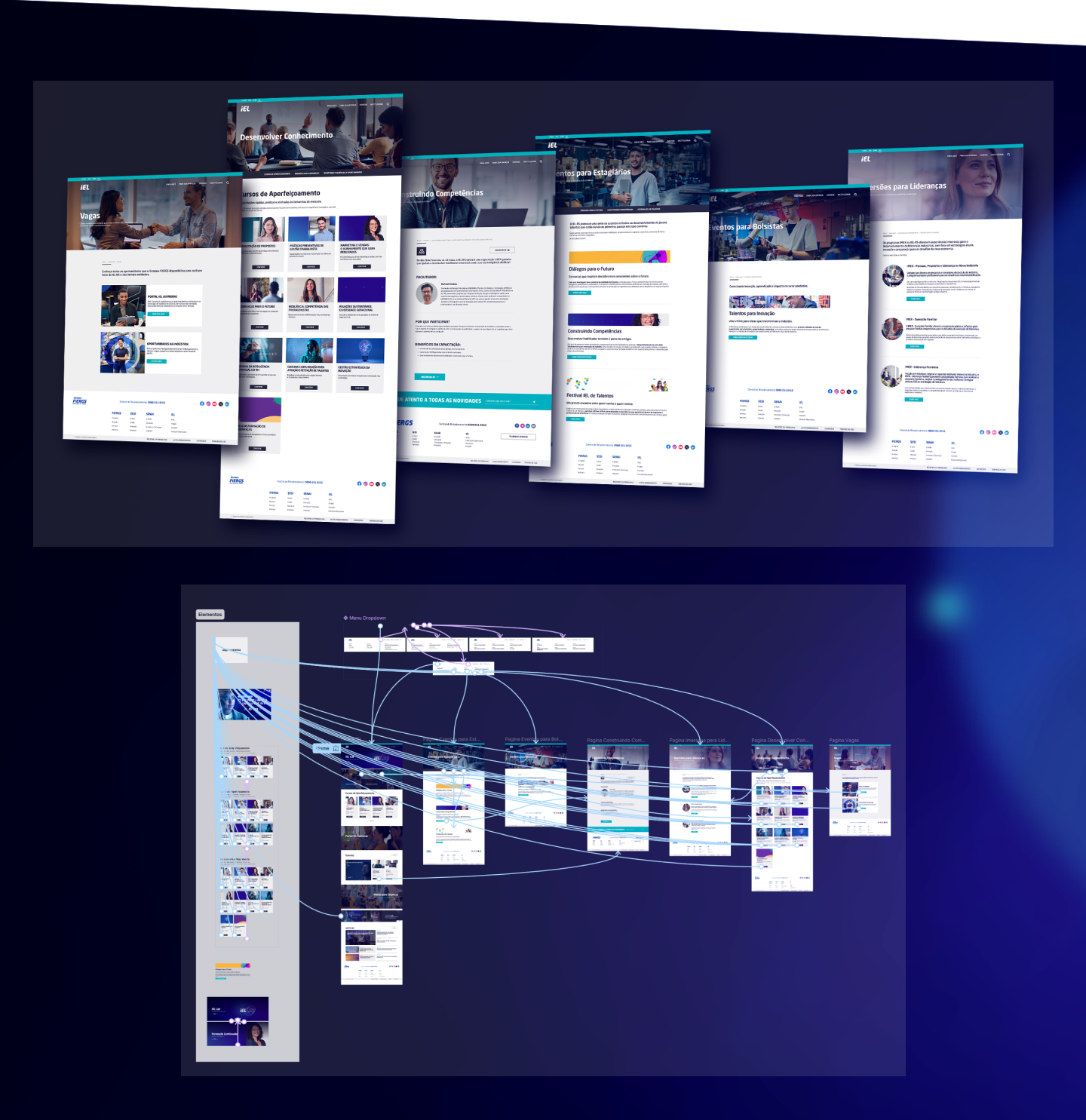
Click here to see the complete project in Figma.
Technical Constraints and Creative Solutions
Beyond rethinking the user experience and reorganizing information architecture, the project required studying the limitations and possibilities of the Drupal technology used in the Major Portal. This platform already operated with a base template, outdated aesthetically and functionally (launched in 2018), and there was no budget to replace it or develop something entirely new, especially since the IEL website is not independent: it is a space within the Major Portal, which also houses other entities of the FIERGS System.
Faced with this scenario, it was necessary to maximize the potential of the existing structure, adapting design and usability to technical constraints. An example of this approach was creating an online store using the module originally intended for blog publications. Instead of directing the user to an article, the interaction led directly to the course purchase page, ensuring functionality and clarity without requiring complex development.
Results
With the approval of the structure and prototypes, the project was delivered to the development team. The new IEL-RS website is live, with much better and easier navigation, showcasing the institution's current and diverse portfolio, and fitting into the visual identity and strategy of the FIERGS System.
Click here to check out the live website with the new architecture implemented.